Commissioners and Board of Education Focus on Future
Evaluating Stoney Creek and Elementary District Assignments - Capital Improvements and Shared Financial Stewardship - Planning Together for the Future

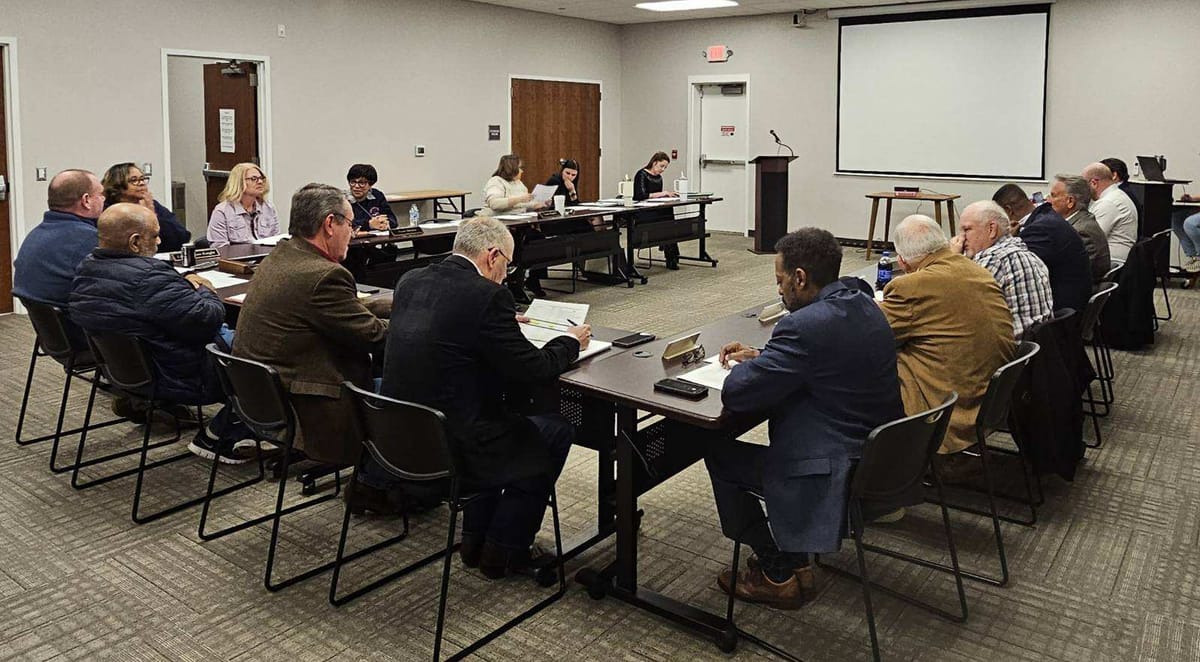
Caswell County’s Board of Commissioners and Board of Education met together on the evening of Tuesday, January 13, identifying several priorities and opportunities they wanted to explore, together.
Capital Improvements and Shared Financial Stewardship
NC G.S. 115C-408 provides that “it is the policy of the State of North Carolina to provide from State revenue sources the instructional expenses for current operations of the public school system as defined in the standard course of study. It is the policy of the State of North Carolina that the facilities requirements for a public education system will be met by county governments.”
It is a simple statement, but a quick glance at the school system’s budget reveals a much more complicated reality that is not unique to Caswell. You can learn more about the state’s not so straightforward financing and governance structure for public education in County Responsibility for Public School Funding from Coates’ Canon, a blog created by the UNC School of Government faculty and Basics of County Financing for Public Schools from the NC Association of County Commissioners.
That complicated financing and governance structure has, in the past, created tension between the two governing boards, each wrestling with the rising cost of operations, limited revenue, and an ever-growing list of regulatory requirements. Those tensions often reached a stalemate, and costly capital repairs and maintenance would be delayed until the next budget year.
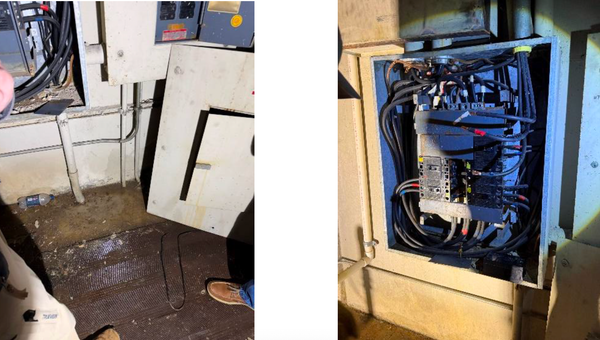
Last year, members of both boards toured local school buildings to evaluate capital outlay needs. The Board of Commissioners then approved a special allocation of $888,000 for extensive roof repairs and HVAC replacement/repair at multiple schools.
On Tuesday, the Board of Education provided an update on that capital project list, reporting that a couple projects were underway with most still waiting on additional bids and quotes that were expected to be received by the end of January. They also sought and received approval to add a new project to the 888 Capital Reserve list. They shared that South Elementary’s water filtration and treatment system has failed. A temporary repair is in place, but the system will need to be replaced when the students are out of school. Brook Underwood, Chief Finance Officer for Caswell County Schools explained that the $18.8 million grant recently awarded to the school system for improvements at Oakwood Elementary would cover the Oakwood projects that had initially been on the 888 Capital Reserve list, freeing up those funds for South’s water system.
Since many of the projects on the 888 Capital Reserve list cannot be completed until students are out of school for the summer, the Board of Education warned that there was a chance some project completions and reimbursement requests might stretch into July or early August of 2026.
Both boards agreed that continued transparency and ongoing communication would help them work together be good stewards of county tax dollars while meeting the needs of Caswell’s students.
Evaluating Stoney Creek and Elementary Districts
Mel Battle, Chair of Caswell’s Board of Education told the Commissioners that his board was taking a close look at Stoney Creek Elementary School and elementary school district assignments.
“I wanted to be up front with you about that because we could save some money if we do something different,” Battle said, going on to explain that North and South Elementary Schools could each hold 700 students but enrollment at North was only 307 and South was only 234. Both schools were constructed in 1992, just over 30 years ago.
Oakwood Elementary in Yanceyville has 367 students and was constructed nearly 60 years ago.
Stoney Creek Elementary School has an enrollment of 140. Battle pointed out that Stoney Creek is the oldest school in the district, constructed nearly 70 years ago, but stressed that it was a sound building with strong bones. A $22,000 roof repair is the only capital project for Stoney Creek included in the 888 Capital Reserve Fund.
Board of Education member Nicole Smith told the two boards that Stoney Creek was in her district and suggested that no one should make a decision until they had ridden the bus route those students would take if moved to other schools.
“I wouldn’t be so quick to jump,” advised Commissioner Finch Holt, whose district also includes Stoney Creek. He suggested that development in surrounding counties was leading to more new homes being built, citing recent building permit reports. He also pointed completed transportation projects like the I-840 Greensboro Bypass significantly reduced commute times, making southwest Caswell, where Stoney Creek Elementary is located, much more attractive to families moving into the area.
Both boards agreed with a suggestion made by Board of Education Vice Chair Joel Lillard for the school system to develop a direct communication channel with County Planning and/or Central Permitting, so they begin regularly receiving data and information related to housing development to better inform their own decision-making around elementary school districts.
Planning Together for the Future
County Manager Scott Whitaker had also referenced the importance of data-informed planning processes earlier in the meeting when he shared with the Board of Education that the county had begun the process of updating its 2013-2014 Comprehensive Plan. Commissioners have appointed a 23-member committee to help guide and inform that process, which is being coordinated by County Planner Jason Watlington. Whitaker advised that committee would be meeting soon for its second time and asked that members of the Board of Education actively participate and provide input in the community engagement process of that plan update that was being developed.
In response to a question from Commissioner Frank Rose, the Board of Education confirmed that they are working with the Department of Transportation to study traffic flows and ways to mitigate traffic safety concerns related the school drop off and pick up times at both North and Oakwood Elementary schools.
Commissioner Tony Smith questioned if there were plans for the Civic Center’s future, saying it could be an excellent economic development tool.
Board of Education Chair, Mel Battle reminded both boards that there was a time the Civic Center made money, but that current rentals did not cover costs.
Members of both boards reminisced about how successful the Civic Center had been years ago under the leadership of the late Lee Fowlkes. They recalled performances by bands like Alabama and quality children’s theatre and music programs that provided a cultured field trip experience for school children across the region.
Board of Education member Trudy Blackwell pointed out that Mr. Fowlkes and others had also worked to secure outside grant funding to help support Civic Center programming and operations.
Members of both boards expressed an interest in exploring how they might work together and pool resources to “bring back” the Civic Center.
The two boards also took the opportunity to share general updates. They agreed to meet at least twice a year and said they intend to meet again during the budget development process. Tuesday's meeting was attended by every County Commissioner and Board of Education Member. Board of Education Vice Chair, Joel Lillard, shared that Interim Superintendent was unable to attend due to illness.