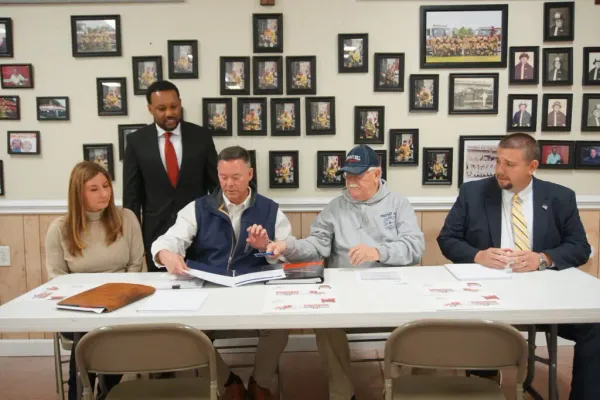
EMS Anticipates Transition
Interim Director John Yarbrough does not know what the future holds but he is proud of his team at Caswell EMS and the work they do everyday

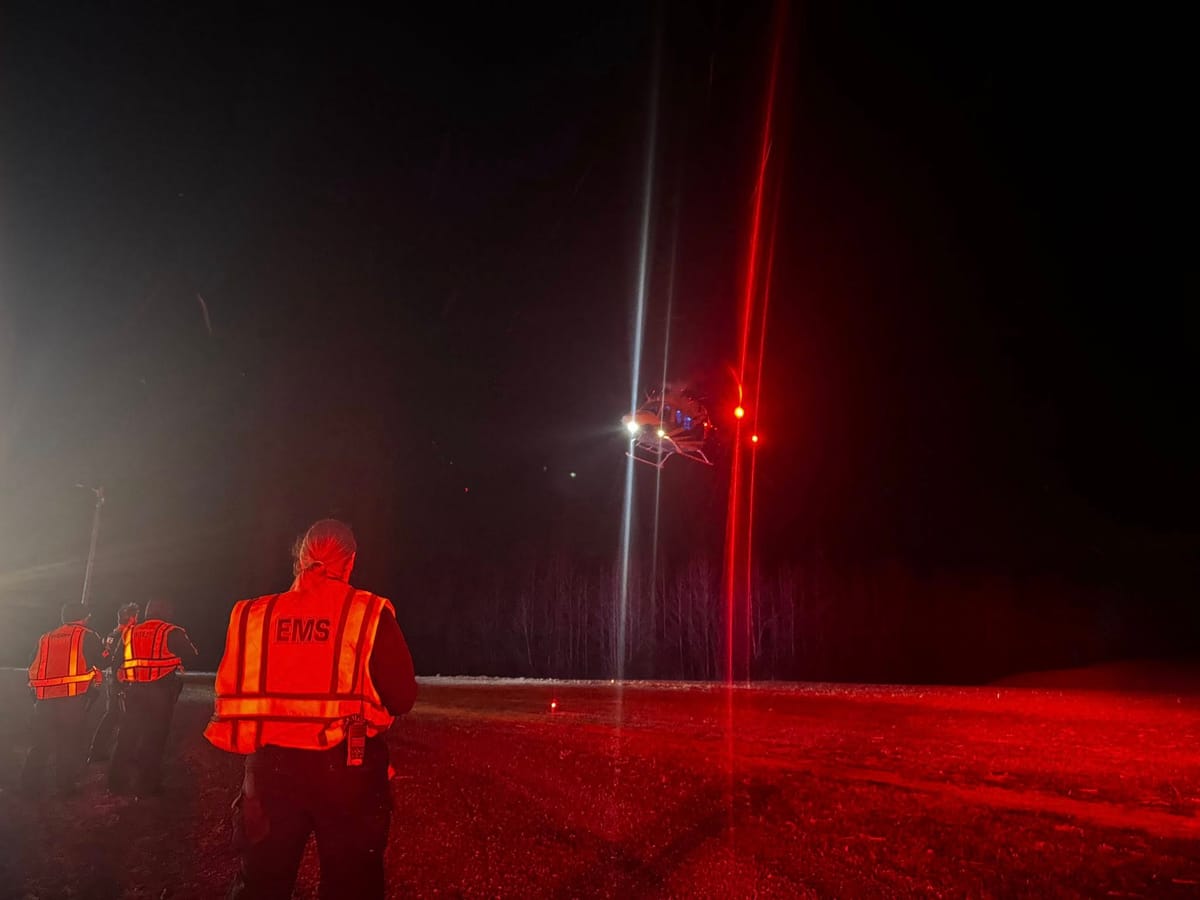
John Yarbrough, of Prospect Hill, was 19 years old first began working for Caswell EMS (Emergency Medical Services) as a brand new Emergency Medical Technician - Basic (EMT-B).
It was 2008. Caswell EMS would respond to 3,058 calls that year.
Seventeen years later, that call volume has increased to 4,535 and Yarbrough, who is now married with a family, has a lot experience, and a lot more responsibility.
He worked in the county as an EMT-B for four years before becoming a paramedic in 2011. He then worked in Alamance County until November of 2017, when he returned to Caswell EMS, becoming a Shift Supervisor in 2018 and Emergency Services Operations Manager in March of 2024.
Yarbrough’s been serving as Interim Emergency Services Director since the July 2025 retirement of former director, Barry Lynch.
In a January 14th job posting, the county stated it was restructuring Emergency Services so that Emergency Management (EM) would fall within administrative oversight of the 911 Director, eliminating the Emergency Services Operations Manager position at EMS. That restructured the Emergency Services Director position to an Emergency Medical Services (EMS) Director/Deputy Emergency Management (EM) Coordinator position.
That posting was then revised on Wednesday, January 28th to clarify that "Emergency Services is being restructured so that Emergency Management (EM) no longer automatically falls within its administrative oversight. Upon the County Manager's appointment of a permanent EMS Director, primary EM functions might shift pursuant to the Board of Commissioners' (Board's) appointment of a new EM Coordinator. The Board-appointed EM Coordinator will in turn appoint a Deputy EM Coordinator. Given the Board's role and future EM Coordinator's role in these appointments, it is unclear at the time of this posting if any EM duties will be expected of the appointed EMS Director. It is management's hope that critical public safety departments will ultimately be cross-trained to provide administrative back-up and improve stability, flexibility, and continuity among EMS, EM, and 911 Communications."
Yarbrough said he intended to apply for the position once it was posted, but during an interview prior to that initial January 14th posting, he was more focused on the immediate tasks at hand – recruitment and retention, emergency preparedness planning, and budget forecasting.
“I don’t know yet what it will look like,” Yarbrough said of his future during that January 12th interview. “There’s no guarantee I’ll get the job and the job I had before may no longer exist, so I don’t know what to expect.”
“But that’s for them up there to decide,” he said, gesturing towards Court Square. “We’ll cross that bridge when we come to it. I’m here now and as long as I am, I’m going to make sure nothing slips through the cracks and make what improvements I can.”
When fully staffed, Caswell EMS operates four ambulances every day – three are 24-hour trucks and one is a 12-hour truck, meaning you have three trucks at night and four during the day. Staff is split into four 24-hour shifts, each led by a shift supervisor, who also serves as a Paramedic on one of the ambulances.
Everyone on staff shares responsibility for daily care and inspection of the vehicles along with maintaining, stocking, and accounting for equipment and supplies. They currently have seven ambulances in the fleet. The newest unit was recently taken out of service temporarily for necessary repairs after a close encounter with another truck in the crowded ambulance bay of an area hospital.
Yarbrough said that Caswell ambulances travelled approximately 182,000 miles in 2025.
The oldest of the fleet came into service in 2013. Several are nearing the end of their lifecycles and will be due to either be remounted or replaced over the next few years. Yarbrough says an ambulance replacement schedule is critical for the department's long-range planning.
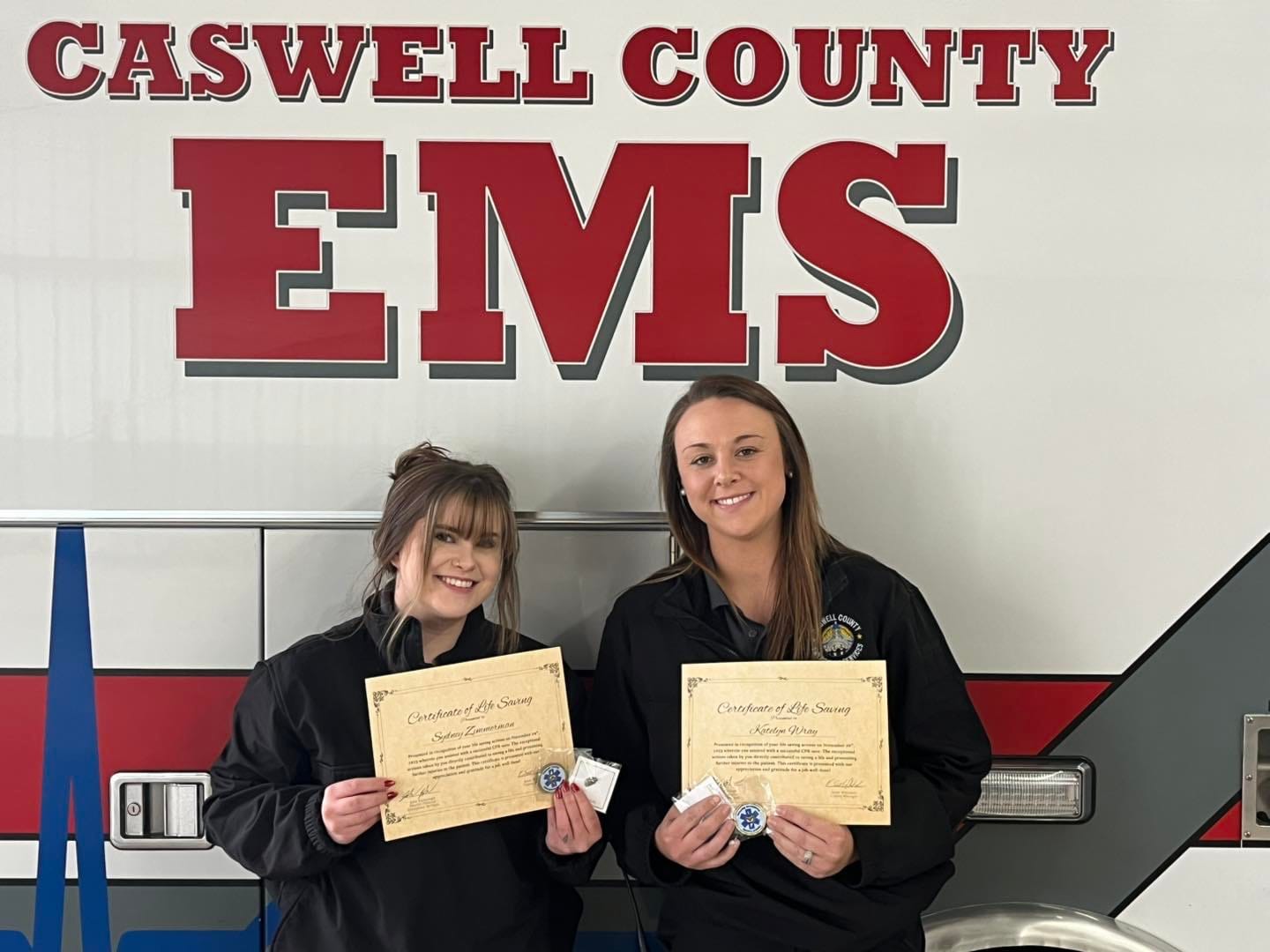
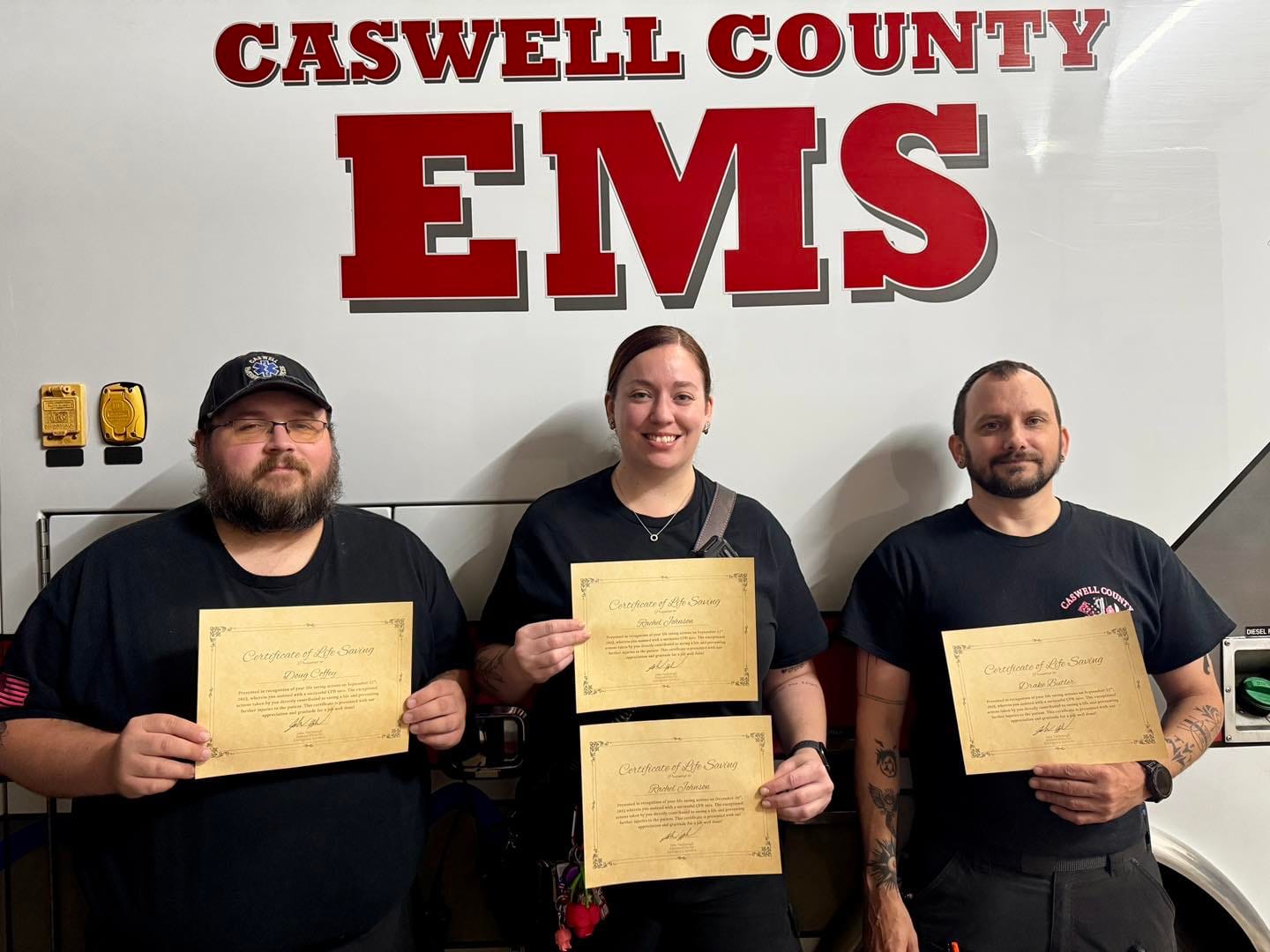
Photos courtesy of Caswell EMS, on the left, Sydney Zimmerman and Katelyn Wray were honored in December for their role in a CPR save. On the right, Paramedic Doug Coffey, EMT Rachel Johnson, and Paramedic Drake Butler, was honored for their September call where they achieved ROSC (Return of Spontaneous Circulation) prior to the arrival of the Emergency Department. Johnson was recognized for a second CPR save as well. Yarbrough believes it's important to consider staff well-being, celebrate accomplishments, and invest in staff training.
People Power
“Caswell EMS is not immune to the staffing challenges facing EMS agencies nationwide,” Yarbrough said of the agency’s consistent need for paramedics.
“It’s not just about the money,” he stressed. "We're not in it for the money. We just want to be able to support our families."
He explained that many paramedics or potential paramedics were switching to other healthcare professions such as nursing where they hoped to find better schedules and a better quality of life, acknowledging that the EMS lifestyle can be challenging. Inconsistent meal schedules, sleep cycle disruptions, and repeated exposure to trauma all negatively impact a person’s health and overall well-being. Frequent surges of adrenaline and other stress hormones like cortisol wreak havoc on the body.
Yarbrough believes taking care of staff should be a top priority. He says it is important to consider their well-being, celebrate their accomplishments, and invest in staff training.
“If we’re taking care of them, they’re going to take care of our citizens,” he explained. “My goal is to have 28 full-time employees that everyone trusts to take care of their families.”
Yarbrough explained that they’ve tried to make it easier for EMT-Bs to go back to school for their Paramedic certification and ongoing training programs are readily available. He said they were happy to train qualified applicants of strong character. He considers it a necessary investment in the future.
“We can teach you the skills,” he said. “What we can’t teach is character, we can’t teach you to care, and that’s what matters most.”
Yarbrough also stresses the importance of strong working relationships with other agencies like 911 Communications, the county’s volunteer fire departments, law enforcement, area hospitals, and community-based organizations.
What Can you Do?
When asked how Caswell residents could best support Caswell’s Emergency Medical Services and its staff, Yarbrough suggested three key things:
- Know when to call 911. Non-emergency calls tie up resources and drive up expenses.
- Support and/or join your local fire department. Public safety in Caswell County relies heavily on volunteer fire departments and they all need more volunteers.
- REFLECTIVE HOUSE NUMBERS – It is hard to spot faded numbers on a dark mailbox in the middle of the night. Please make it easier for them to find you in the event of an emergency by making sure your house numbers are reflective and easily visible at your mailbox and/or driveway.