
Eric Crisp for Sheriff
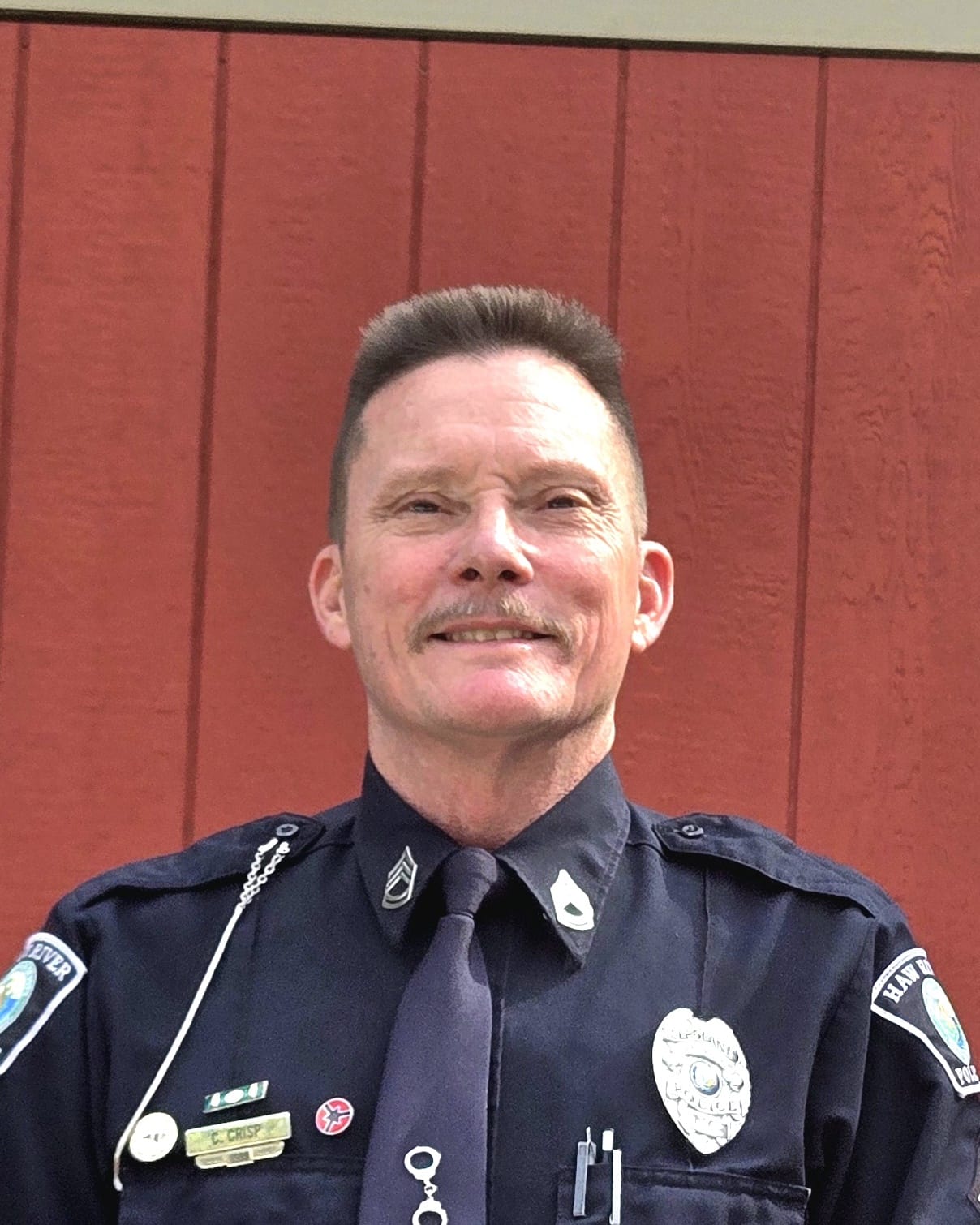
Eric Crisp answers questions about his campaign to serve as Caswell County Sheriff.

Eric Crisp provided the following responses to questions about his campaign to serve as Caswell County Sheriff.
Please describe your educational background, including any relevant credentials or specialized training.
I graduated from Bartlett Yancey High School in 1986. I earned a Class A commercial driver's license at 21 and have kept it current ever since.
I entered Basic Law Enforcement Training in 1998. I graduated as Most Outstanding Student and posted the highest firearms score in my class.
Law enforcement certifications and training since then:
- First Line Supervision certified
- Field Training Officer certified
- Graduate, North Carolina Police Law Institute
- North Carolina Law Enforcement General Instructor
- Tactical Weapons Instructor
- Active shooter response training
I am still certified and hold reserve status in Caswell County today.
I am pro-training, and I want to be clear about why that costs the county almost nothing. The state pays for law enforcement training in North Carolina. The agency covers transportation to the school and the officer's meal for the day. That is the bill. Better trained deputies are one of the few real improvements a Sheriff can make without asking taxpayers for another dollar.
Please describe your professional background, highlighting specific roles or responsibilities that have prepared you to be successful in the position you are seeking.
I did not start in law enforcement, and I think that matters.
I grew up working. My grandfathers were tobacco farmers. My father has been a mechanic in Prospect Hill since 1958, and because of him I knew most of the farmers in this county and most of their equipment before I was grown. I raised cattle, put up hay, and worked tobacco.
In 1991 I went to work for the power company in Durham. I started as a groundman, became a lineman, and worked up to supervisor over my own crew. About seven years. I learned there how to run a crew, keep people safe on dangerous work, and answer for the results.
In 1998 I went to the law enforcement academy. I served about three years at the Hillsborough Police Department, then roughly seventeen years at the Haw River Police Department in Alamance County — over twenty years sworn. I started on patrol and worked my way up to Sergeant over Investigations.
Investigations is where I learned the standard I would run this office by. Everything you gather has to be pertinent, it has to be constitutional, and it has to hold up in court. Hearsay is not evidence. You do it right or you lose the case and fail the victim.
After I retired from full-time service I bought my own equipment and started a tree-removal business. I sign the front of the paychecks now. I meet a payroll, keep insurance current, hire and train people for physical and dangerous work, and answer to customers. Running the Sheriff's Office is a budget, a staff, and a duty to the public. I have done all three.
I still hold reserve status in Caswell County.
Please describe any current or previous military experience.
None. I have never served in the military. I have deep respect for those who have.
Please describe your connection to, and vision for, Caswell County.
My family has been in Caswell County since 1764. I was born and raised in Prospect Hill and I live there now. Both my grandfathers farmed tobacco here. My father has fixed this county's equipment in Prospect Hill since 1958. I went to Bartlett Yancey and graduated in 1986. My roots do not go any deeper anywhere else, because there is nowhere else.
I am a bit of a historian, and I worry about what we are losing. Elderly people in this county are sitting on land their families handed down, living on a fixed income, watching taxes climb. If that keeps up we lose the farms, we lose the barns, and we lose sight of where we came from. That is not a law enforcement problem, but a Sheriff who does not understand it does not understand this county.
My vision is plain. Caswell is a good place to live and I want it to get even better. That means a Sheriff's Office people trust enough to talk to, deputies trained well enough to handle the worst day, drugs treated as the root of most of our crime instead of a side issue, and a budget any taxpayer can read without filing a request.
I am not a politician. I am your neighbor.
Please describe your involvement, whether volunteer service or membership, with community, non-profit, or service-based organizations, noting the difference between current and past involvement.
I will give you the honest version rather than a long list.
Current. I am a member of Bethel, and I visit other congregations around the county as well — over a year I am in a good many of them. I attend local Ruritan events when I can. Beyond that, I run a tree-removal business, and between the work and my family that is most of my time.
I am not going to pad this. I have spent my life working — on farms as a boy, for the power company, twenty years in law enforcement, and now running my own crew. That is not the same as committee service and I am not going to dress it up as though it were.
Past. Twenty years of law enforcement is community service in the plainest sense of the words. I answered calls at three in the morning. I checked on elderly residents who had nobody nearby. I held keys to people's homes and businesses while they were away, because they trusted me with them. I am prouder of that than of any organization I could list here.
Please describe any board service or committee assignments, noting the difference between current and past service.
None, current or past.
If you would like, please use this space to describe how your values, faith, and/or religious beliefs shape your decision-making. If you have a home church or are actively involved in an area congregation, please share that here.
I am a Christian and visit congregations across this county, and I am glad to. It is one of the better ways to know the people you serve.
What my faith asks of me in this job turns out to be the same thing the Constitution asks: do the right thing, do it for the right reasons, and treat every person the same.
Every person who walks into the Sheriff's Office was made in the image of God. That means the man in handcuffs gets told the truth, and so does the family that just got robbed. It means I do not do a favor for someone because of who their people are, and I do not come down harder on someone because of who theirs are. What you do for one, you do for the other.
I have known officers who forgot that. It is how a community stops calling you.
What do you believe is currently the greatest strength of the Caswell County Sheriff's Office and how would you build upon that strength if elected?
The detention center. I expect that to surprise people, because it is not what a challenger is supposed to say.
Caswell operates its jail at a lower net cost to taxpayers than any comparable county I looked at. Net cost here runs about $43 per resident. The six peer counties I compared — Hertford, Northampton, Warren, Anson, Montgomery, and Bertie — run $63 to $99. The difference is that Caswell earns real money housing inmates for other agencies, roughly $1.19 million in the most recent year, against about $355,000 for the best of those peers. The jail is not a drain on this county. It is close to carrying itself.
I looked this up before I said it, and I would rather tell you what is working than pretend nothing is.
Building on it means two things.
First, protect it, because it is slipping. That housing revenue fell hard in the most recent year — U.S. Marshals housing down about $152,000 and misdemeanant confinement down about $133,000 — while inmate medical costs rose to about $388,000, up 119% since 2021. The margin dropped roughly 71% in a single year. Nobody is talking about that publicly. A Sheriff should be, before it becomes a hole in the county budget.
Second, plan for the money that is about to come free. The debt on the jail is scheduled to retire around fiscal year 2027, which frees roughly $671,000 a year. That decision belongs to the Commissioners, not the Sheriff. But the Sheriff ought to be at that table early with a written case for what deputies, training, and coverage that could buy — instead of finding out after it has been spent.
The other strength is the deputies themselves. They are paid modestly for hard, dangerous work in a county with 428 square miles to cover. Keeping experienced people is cheaper than replacing them, and there are ways to earn a deputy's loyalty other than throwing more money at him.
Sources: Caswell County general ledger detail for the Sheriff and Detention departments, fiscal years 2021 through 2026 preliminary, produced by the County on August 14, 2026 in response to a public records request; audited financial statements for Caswell and the six comparison counties as filed with the North Carolina Local Government Commission.
What do you believe is the greatest challenge currently facing the Caswell County Sheriff’s Office and how would you address that challenge if elected?
Coverage. Caswell is 428 square miles with about 22,700 people spread across it. When you are in Semora or Providence or the far end of Prospect Hill and you call for help, the question is not whether a deputy is coming. It is how far away he is right now.
People tell me this constantly. What they want is not a statistic. It is knowing somebody will answer the call.
I will not promise a deputy on every road, because coverage is bought in people, and people are the most expensive line in the budget.
What I will promise is that I will do the arithmetic in public. How many deputies this office has, how they are scheduled, what the overtime line will carry, where the calls come from and how long they take — none of that is available to a taxpayer today. The entire operation is reported to you as a lump sum. I have asked for those numbers as a candidate and have not gotten them. As Sheriff I will publish them: a line-item budget and regular public reporting on staffing, response, and case outcomes.
I have a specific plan for rural coverage. I will lay it out later this fall, once the county returns our public information requests.
There is one commitment I can make now, because I know what it costs. I am certified by the state as a general instructor, and I want active shooter scenario training run on a regular cycle with our schools — response, triage, staging, and how you handle parents arriving at that scene. Lack of it is a risk to children and deputies and a liability this county cannot afford.
Here is the harder version. Caswell reported 71 crimes in all of 2024 — every break-in, theft, assault and stolen car together, the lowest of any county in North Carolina four years running, with every month filed and no missing-data flag from the state. That reads like good news, but either every other county in North Carolina is counting wrong or we are, and ours is the likelier answer: counted the way our neighbors count, Caswell would be nearer to 250 a year, about seven in ten never reaching the state. At first it might look like people stopped calling, which would be a trust problem. But the number of Caswell people in prison or on probation went up over the same period, 311 to 329, so that does not seem likely. The other possibility is that they called and it was not written down, which is a records problem. It is not one number, either: the same gap in reporting shows up in what our schools report and in our overdose records — different measures, kept in different places, and none of them square with the others. This data and in-depth analysis can be found on our campaign website.
You cannot fix what you are not allowed to count. That is where I would start.
The Sheriff has considerable discretion in how the law is enforced. Please describe the parameters that guide how you apply that discretion. Residents want to better understand the factors that influence your decision-making. What are the values, priorities, or beliefs informing your thought process? Who are the individuals or groups that you look to for guidance? How would those influences and your experience shape the performance of your duties as Sheriff?
Discretion is real. Here is the line I hold.
The law should be applied to everyone the same. You do not choose by skin color, religion, party, or whose sign is in the yard. The state wrote the law. You carry it out.
Discretion is not permission to ignore state law. If somebody in this county murders a man nobody liked, I go after him all the same. How popular the victim was does not enter into it.
Discretion governs where a small office puts its finite time, people, and money. Caswell is not Wake County. We do not have their budget, their staff, or their problems. Something that gets heavy attention there may reasonably get less of ours. The question I keep coming back to: how do the people of this county want to live, and how do they want their Sheriff's Office to operate inside state law?
An example. I asked the people who follow our campaign page about Flock cameras — not a scientific poll, just whoever chose to answer. 225 weighed in. Unconstitutional, 83. Intolerable, 56. Useful, 38. Not useful, 19. Tolerable, 15. Constitutional, 14. A good many believe the cameras probably work and do not want them anyway. I have not seen anyone else in this race ask the public anything about it.
Flock is a tool that helps solve crimes. But if the people overwhelmingly do not want it, it is the job of government to follow the will of the people within what state law allows. Both things can be true at once.
The cameras are not unconstitutional simply by existing. The problem is not the hardware, it is the lookup — who can run a search, for what reason, and whether anyone ever checks. So my position is a rule, not a slogan: judicial sign-off before a search, a written reason on every query, a public log, short retention. Or cut the funding, if they are truly intolerable. That is how this is supposed to work. Bad ideas die on the vine.
On constitutionality: from twenty years of investigations, evidence has to be collected properly for two reasons. So that people's rights are not violated, and so that the charge will stick and result in a conviction. Not hearsay. Not close enough. If the case will not stand, you have not helped the victim — you have failed them twice.
Who I look to: the law and the courts that interpret it, the District Attorney, my training, my faith, and the people of this county. If residents trust you enough to tell you what is happening on their road, you had better spend time and attention on it.
If an otherwise good person makes an honest mistake and shows remorse, that is the time for learning, growth, and discretion. If a repeat criminal commits yet another crime, it is not. Discretion without accountability is just favoritism nobody can see. Any decision I make, I should be able to explain in public.
As an elected official, the Sheriff is hired by the voters, not the County Manager or County Commissioners. However, the Sheriff’s Department and Detention Center are governed, and funded, by the County Commissioners. Please describe your experience navigating relationships with governing boards and how you intend to work with the County Manager, Board of Commissioners, and other County departments or community partners.
The Sheriff is hired by the voters and funded by the Commissioners. Those are two different bosses and a Sheriff who forgets either one causes problems.
My experience with this is not political, it is practical. At the power company I ran my own crew and answered to management for what that crew did. As Sergeant over Investigations I ran a unit inside a department with a chief, a town, and a District Attorney all with a claim on my work. As a business owner I answer to customers, to insurers, and to the people on my payroll. In every one of those the same thing worked: bring people accurate numbers before they have to ask, and never let them be surprised in public.
That is the specific thing I intend to change.
On June 3, 2024, a Caswell County Commissioner asked for year-to-date line item spending for her own county. The Vice Chairman's answer was that they had "asked for that for a while." Those are the people who set the tax rate. If the Commissioners cannot get numbers out of county government, the public has no chance.
So my commitment is concrete. The Commissioners and the County Manager will get a line item budget from this office and regular reporting without having to ask — staffing, overtime, case outcomes, jail revenue. Bad news early and in writing. If I need something, I will bring the cost, what it buys, and what I looked at instead. If they tell me no, I will say so publicly, without theatrics, and keep working.
I would rather disagree with the Commissioners over a number we both have than have a good relationship built on them not knowing.
Other partners matter as much. Caswell County Schools on emergency planning. Emergency services and the volunteer fire departments, who are often closer than we are. Neighboring sheriffs, because our drug problem crosses county lines every day. The SBI and DEA, who can work cases and reach across jurisdictions in ways a county this size never will alone. You cannot do this job alone, and power comes in numbers.
Source: Caswell County Board of Commissioners minutes, June 3, 2024.
What do you believe are the primary factors driving crime in Caswell County? What role, if any, do you believe the Sheriff’s Office should play in proactively addressing those drivers?
Drugs. That is the honest answer, and it is what people in this county tell me over and over.
Most of the petty crime here runs downstream of addiction. People steal things and sell them to get money for the next one. So if you do something about the drugs, you do something about a large share of the break-ins and thefts at the same time. And the damage does not stop at the crime report. Drugs destroy families. When somebody's child gets addicted, the whole family comes apart from the inside. That is the part that does not show up in a statistic.
The second factor is geography, and it is not our fault. Highways 86, 29, and 62 run straight through this county into other counties. That makes Caswell a corridor. I have been told for years that this is a stash county — that drugs get held here, in rented or empty houses out in the county, for the trade in other places. Until we get a handle on that, street-level enforcement is treating the symptom.
Yes, the Sheriff should be proactive about it. Three ways.
Build the trust that produces information. Nobody hands you the whereabouts of a stash house because you asked nicely on television. They tell you because they know you and they believe you will do right by them. I have had people call me at three in the morning about a prowler because they had my number and trusted me. That is not sentiment, it is intelligence, and it is the cheapest tool a rural sheriff has.
Partner with agencies bigger than we are. We cannot do this alone. Deputies from other jurisdictions can work here without being recognized by the local trade. The SBI and DEA operate across the lines these dealers cross every day. That costs the county very little and multiplies what a small office can do.
Support community watch honestly. Community watch works, but before you can have a watch you have to have a community willing to pull together. My job is to help build that, show up for it, and answer it when it calls.
There are known drug houses all over the county right now. Since I announced my candidacy, we have become a lightning rod for this intelligence. If I am elected we can make good on that trust and bring the law to these people and reduce our drug activity.
I want to be careful about one thing. Caswell's overall crime rate is lower than a lot of North Carolina on paper, and residents should be proud of that. It is also true that families and business owners here have been victimized and have not gotten the answer they deserved. Both are true. The goal of a Sheriff is not to argue that crime is low enough. It is to make it lower, and to serve the people of this county.
Strategies cannot be fully implemented without the necessary resources. A vision must be financed. Please describe how your vision might be constrained by the County budget, how those budgetary concerns shape your priorities, and the actions you believe are necessary to address those funding challenges.
I will start with something that hurts my own argument. I went looking for evidence that this office overspends, and I did not find it.
Setting the jail and capital purchases aside, Caswell spent an average of about $146 per resident per year on the Sheriff's Office across fiscal years 2022 through 2024. Measured the same way over the same years, the six comparable rural counties I looked at average about $141 and the median is about $150. Caswell is fourth of seven. There is no overspending story here, and I will not run on one that is not true.
What the numbers do show is the direction. Inside those same three years the cost per resident went $127, then $141, then $169 — up about a third in two years. That is why the average is $146 and the most recent year is $169; they are the same series, one averaged and one current.
About 96% of that increase is salaries and benefits. Operating costs grew about 9%. Equipment actually fell. The one big equipment year was a one-time radio system purchase of about $356,000.
That tells you what the constraint is. It is people. Not gear, not vehicles, not a wish list. Any promise I make about coverage or response has to be paid for in deputies, and deputies are the most expensive thing in the budget. So I will not promise a car in every corner of this county without telling you what it costs.
Here is how I would set priorities.
Take the free things first. The state pays for law enforcement training. The county pays travel and a meal. Better trained deputies, at almost no cost, is the highest return available and I would push it from day one.
Protect the revenue we already have. Jail housing income is falling and inmate medical is rising fast. Slowing that decline is worth more than any new appropriation I could realistically win.
Get in front of the debt rolloff. The jail debt is scheduled to retire around fiscal year 2027, freeing roughly $671,000 a year. That is the Commissioners' money to allocate, not mine. But that conversation should start now, in public, with real numbers.
Show the work. Caswell County has been on the state's Unit Assistance List since about 2021 — one of only fourteen counties in North Carolina. Its annual audits have been filed months to years late, and the fiscal 2025 audit has not been filed at all. That is a county finance problem, not the Sheriff's. But it is exactly why the Sheriff should publish clean, line-item numbers on his own initiative. When a county's books are behind, the department that opens its own books first is the one people believe.
Sources: Caswell County Sheriff and Detention general ledger detail, FY2021-FY2026 preliminary, produced by the County August 14, 2026; audited financial statements filed with the NC Local Government Commission; NC Treasurer's Unit Assistance List.
Contact
🗣️ Eric Crisp will be available at the September 19 Bright Leaf Hoedown to speak with residents.
💻 The Committee to Elect Eric Crisp can be found online at https://crispforsheriff.org
📲 You can also find the campaign on Facebook, Instagram, and TikTok.
📧 You can also contact the Committee to Elect Eric Crisp via email at CrispForSheriffAdmin@proton.me.