NC Measles Cases Rising
Upstate South Carolina measles outbreak beginning to reach into North Carolina.

Over a 19-year period, 2005-2024, there were 35 cases of measles in the state of North Carolina. Twenty-three of those were tied to a single outbreak in 2013 after unvaccinated persons traveled internationally. There were no cases of measles in the state 2019-2023, then one in 2024 and another related to international travel in the summer of 2025.
The NC Department of Health and Human Services (NC DHHS) is reporting 8 cases in the state since December 20, 2025.
Those cases are in Cabarrus, Polk, Rutherford, and Buncombe counties, which are located just north of the Spartanburg, South Carolina area, where public health officials are currently monitoring 558 measles cases. According to NC DHHS data, the measles virus has also been detected in wastewater samples from Buncombe County, Charlotte, and Cary, indicating viral shed in those areas.
Across the country, there have been 2540 cases since January 1, 2025, with the number of 2025 cases topping any year since 1991. According to the Centers for Disease Control (CDC), 11% of patients diagnosed with measles in 2025 required hospitalization. Three of those patients died, the first patients in the US to die of measles since 2015.
The measles, mumps, and rubella (MMR) vaccine is considered to be highly effective. According to the CDC, communities with vaccination rates of 95% or higher develop herd immunity. Vaccination coverage among U.S. kindergartners has decreased from 95.2% during the 2019–2020 school year to 92.5% in the 2024–2025.
In the fall of 2024, 95.27% of Caswell County's kindergarteners were up to date on their recommended childhood vaccinations, including MMR, but that rate was only 92.07% in 2023, 89.18% in 2022, and 93.71% in 2020 leaving many in the county unprotected. In 2021, 98.15% of Caswell's kindergartners were up to date on their vaccinations. Vaccination rates are monitored by the local health department and NC DHHS.
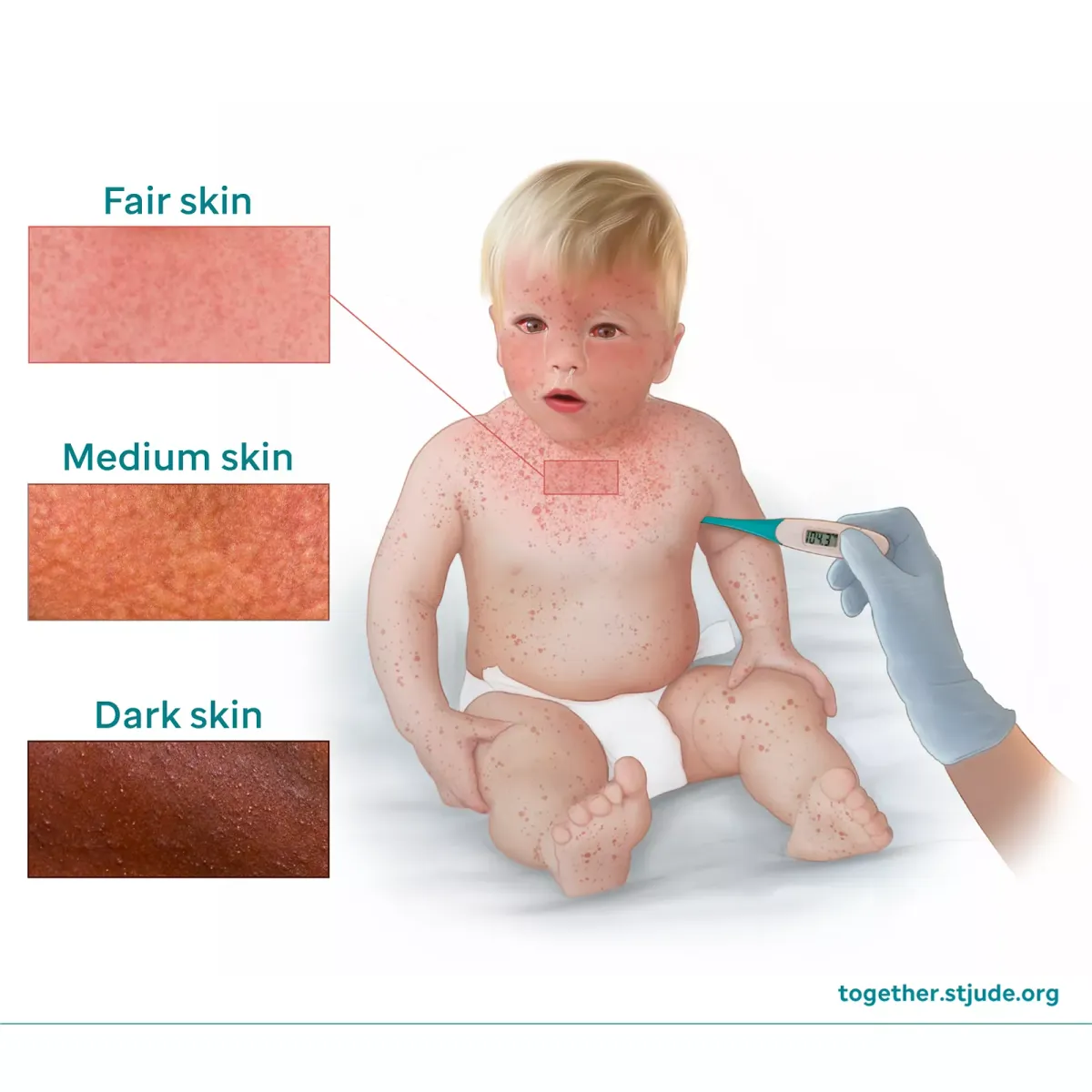
Measles is a highly contagious respiratory virus that commonly causes a rash, high fever, runny nose, cough, and red, watery eyes. Common complications are ear infections and diarrhea while serious complications include pneumonia and encephalitis (severe inflammation of brain tissue). Persons of all ages are susceptible to infection but children under five, pregnant women, and people with compromised immune systems are at higher risk for serious complications. The CDC reports that MMR vaccinations are 97% effective in preventing infection.
If you believe you may have, or been exposed to measles, please contact your primary care provider or the Caswell County Public Health Department for guidance. Your healthcare provider and/or public health staff are also available to provide you with more information about the MMR vaccine and/or administer immunizations.
More information on measles and data tracking measles cases can also be found at NC DHHS and the John Hopkins Bloomberg School of Public Health Measles Data Tracker.
Conflict of Interest Disclosure
To learn more about the writer's connection to the Caswell County Department of Public Health, please see this Note on Disclosing Potential Conflicts.