Staff Report Bus Data to Board
The data shows that tiered routes are working, but only when there are enough drivers to cover the routes.

John Berdine, Director of Transportation, and David Useche, Chief Operations Officer, came before the Caswell County Board of Education on Monday, November 23, presenting data that affirmed their position that the tiered bus routes introduced this year are working, and working well. However, the lack of available substitute drivers is a problem.
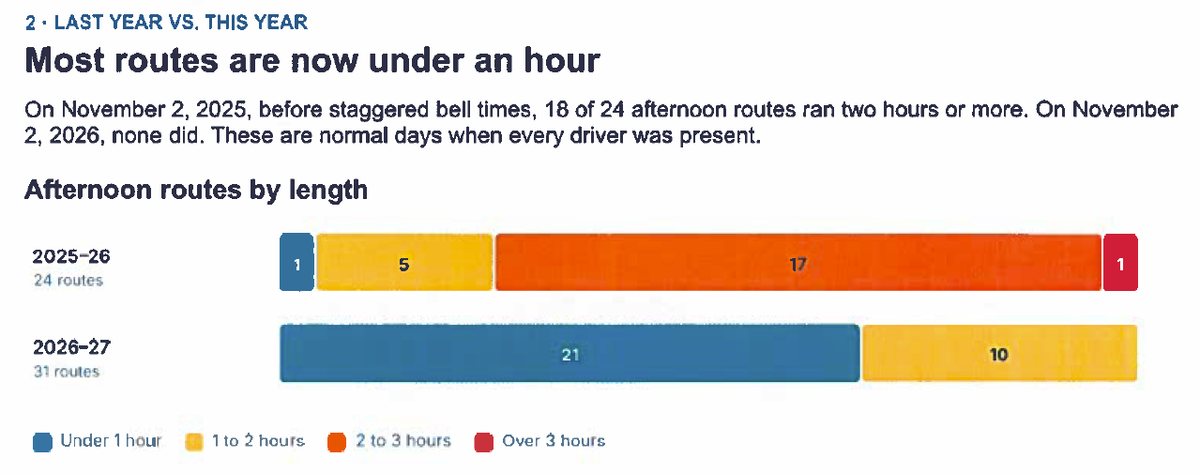
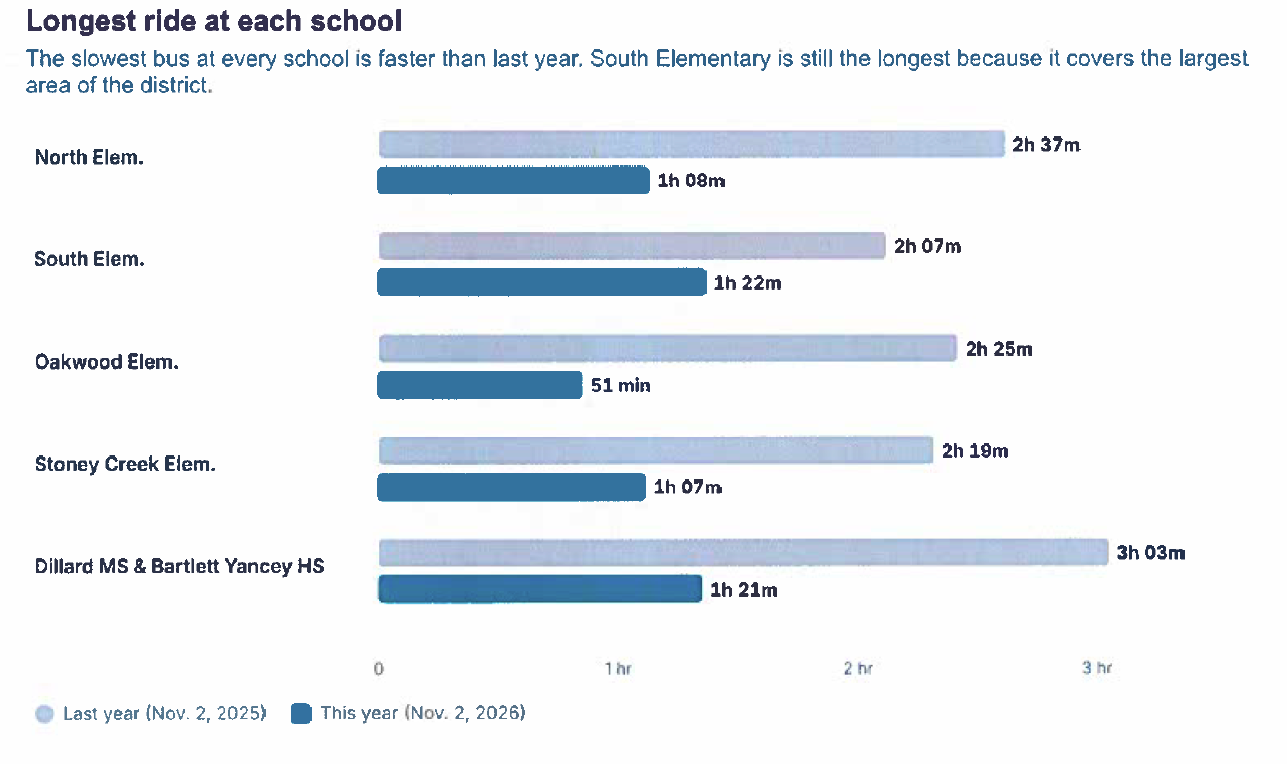
The staff report, which sought to explain “why some buses still run late, and how much faster most rides are” pointed out that this year’s longest afternoon route is 1 hour and 22 minutes, compares to 3 hours and 3 minutes last year.
The first bell and dismissal times were staggered this year to allow the district to implement a tiered routing system to reduce route times despite a driver shortage. Staff reports that last year there were 18 bus routes that were over two hours but that this year, there are none. The average route time this year is 48 minutes, a sharp reduction from last year’s average of 2 hours and 8 minutes.
Why Do Some Buses Still Run Late?
Berdine and Useche explained that driver absences disrupt those routes, especially when a substitute driver is not available. They reported to the Board of Education on Monday that from August 17 through November 9, absences left 75 routes without their regularly scheduled drivers. Only 13 of those routes were covered by substitute drivers.
Useche said that, to understand how the school district covered the remaining 62 routes and why it doing so leaves some students getting home much later than normal, people would need to first understand the difference between tiered routes, split routes, and double routes.
- Tiered Route – A tiered route is part of the normal plan and allows one bus to cover two separate routes, one right after the other. For example, Bus #11 runs one route for middle and high school students and then a second route for students attending North Elementary.
- Double Route – A double route is an emergency fix for when a driver is out and there is no substitute available. A double route is when a driver finishes their scheduled route and then comes back to the school to drive the absent driver’s scheduled route. Students on that second route are not spending more time on the bus, but they are spending more time at school, waiting for a bus driver to run that second route.
- Split Route – A split route is another emergency fix for when a driver is out and there is no substitute available. On a split route, the absent driver’s riders are split up among other buses traveling close to that area. This option can extend the time students spend on the bus by 15-40 minutes but can only be implemented if other buses are already in the area and if there is ample time available to temporarily reassign students to those other buses.
Of the 62 trips impacted by driver absences that could not be covered by substitute drivers, 28 were covered by split routes, 15 were covered by double routes, and the remaining 19 were covered by a mix of the three different route types.
Berdine and Useche acknowledged that adjustments were still being made to improve times, noting that the additional of another tiered route for North Elementary had greatly reduced the ride time for students on Bus #14.
They identified Bus #24 at South Elementary and the EC, or Exceptional Children’s routes as the next priorities to address, noting that Bus #24’s planned route times had been impacted by the Board’s decision to allow only a 45-minute gap in dismissal times at the elementary and secondary schools instead of the full hour initially requested, making it impossible for that driver to reach South Elementary before bus riders are dismissed.
Berdine shared that bus ridership is up this school year, with 58%-60% of students now riding school buses. He told the Board that he would like to hire at least two more full-time drivers and six part-time drivers as substitutes but that recruiting drivers continues to be a challenge, despite having a starting pay rate of $18.94 per hour, which he said is higher than both Rockingham and Person Counties.

Want to stay up to date on all the discussions held by the school board? Subscribe today!

Have a friend or loved one who wants to stay informed? Give them the gift of local news coverage with a gift subscription.


 Community Voice