Untangling County Government Finances
Follow our coverage of the upcoming audit and budget process for a better understanding of how county dollars are being spent, who makes the decisions about those expenditures, and how those dollars are being accounted for.

Over the past several years, many Caswell County Commissioners, department heads, and community members have expressed frustration over an inability to access county finance reports.
Those frustrations grew louder
as the County fell further and further behind in completing the required annual
audits and requests for regular finance reports continued to be met with reluctance.
Staff and outside contractors often explained that they simply did not feel
comfortable reporting numbers that had not yet been verified as accurate.
Commissioners often pushed back that they were just as uncomfortable approving large county budgets without those figures.
What happened?
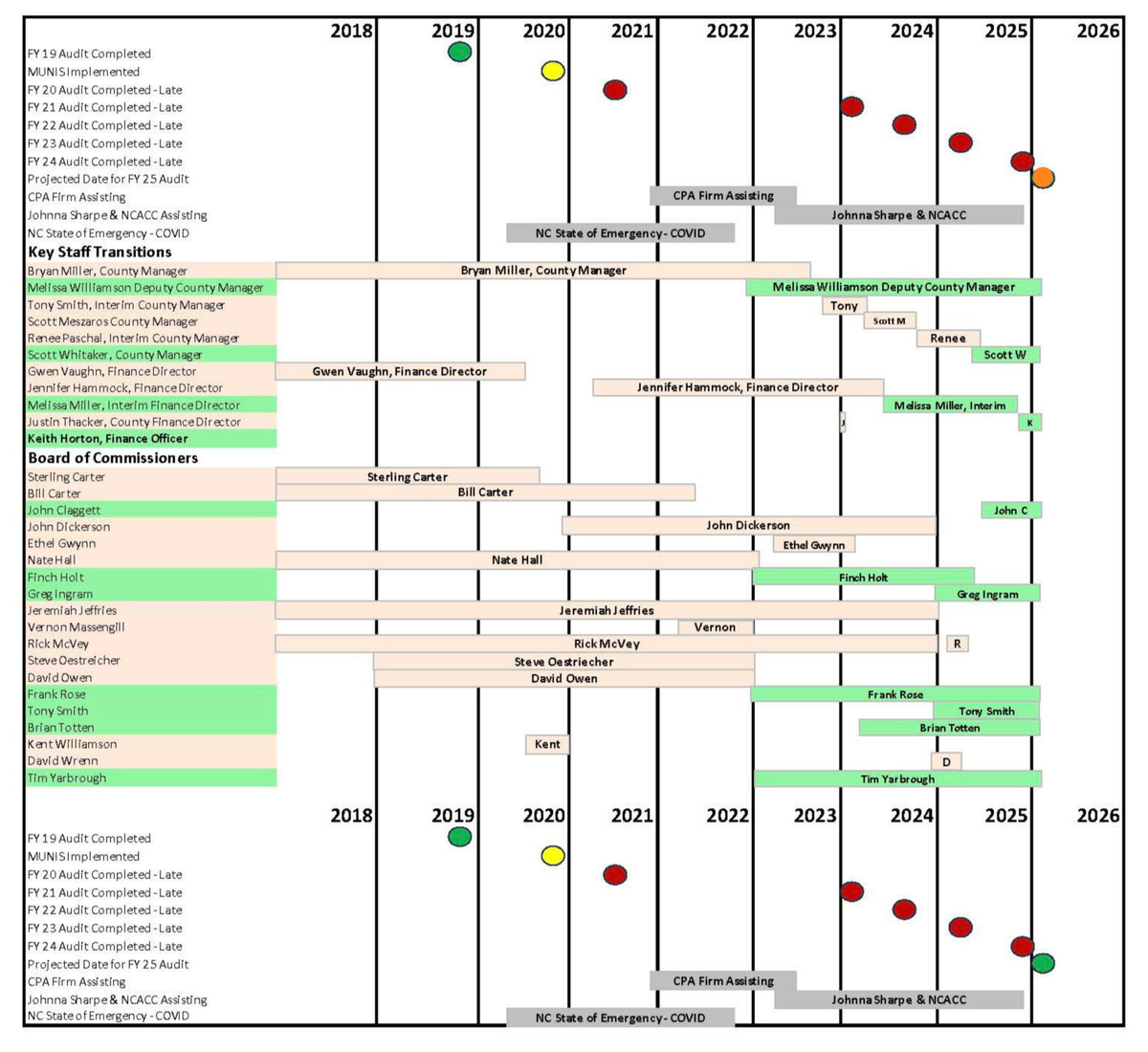
The FY 2019 Audit was performed on time, noting a couple material weaknesses in internal finance controls. The weaknesses identified were related to records reconciliation and regular monitoring of expenses.
In 2020, long-term Finance Director Gwen Vaughn retired and the county implemented a new financial software – MUNIS in October. At the time, County Manager Bryan Miller attributed the six-month delay in the FY 2020 audit to those significant disruptions within the Finance Department and the COVID pandemic.
The FY 2020 Audit that should have been completed by December 21, 2020 was completed six months late, in June of 2021. It revealed both material weaknesses and significant deficiencies in internal controls, also noting deficiencies in the internal controls relates to federal and state awards. The weaknesses and deficiencies identified were related to reconciliation of records, deficit fund balances, prior period adjustments, and a lack of technical experience.
By the time the county received that feedback, it had been operating in MUNIS for nearly a year and were preparing to close out the FY 2021 budget. By the end of 2021, unable to retrieve the necessary reports for FY 2021 Audit and realizing that there were significant errors in the chart of accounts and other key areas of MUNIS, the County brought in an outside CPA firm who was tasked with rebuilding the 2020-2021 financial records in such a way that they could be audited.
It would end up being January of 2024 before the FY Year 2021 Audit was completed. By that time, the county had gone through two full budget cycles (FY 2022 and FY 2023) and half of FY 2024. The inability to produce an audit as required by state law had also landed the County on the Local Government Commission’s (LGC) watchlist, severely restricting the county’s ability to enter into leases or debt agreements without securing approval from the LGC. By the middle of 2023, the County was leaning heavily on Johnna Sharpe, an outside government finance expert identified by the NC Association for County Commissioners.
Sharpe, and the accountants from the CPA firm who had been assisting, warned Commissioners that they would likely continue to see those same types of findings in the FY 2022, 2023, and even 2024 audits. They explained that, as they were identifying issues, they were trying to correct those issues across multiple years but pointed out that many of the same errors would show up in multiple years since multiple years had passed before identifying the errors.
The FY 2022 Audit was completed in August of 2024 while FY 2023 and 2024 were completed in 2025. All showed those same types of deficiencies Commissioners had been told to anticipate.
“I see no evidence of wrongdoing,” Sharpe told the Commissioners in August of 2024. “I see evidence of a lack of knowledge and experience.”
That sentiment has been shared repeatedly by Sharpe and others from outside the county who have been working to clean up the audit backlog, correcting and refining processes along the way.
What now?
The County hired a new County Manager (Scott Whitaker) in April of 2025 and a new Finance Officer (Keith Horton) in November of 2025. The Board of Commissioners is now receiving monthly finance reports and staff says they expect the FY 2025 audit will be completed by the end of February 2026, just two months behind schedule.
That 2025 reconciliation and audit should provide much more clarity around the current status of the county’s finances and related processes, giving county staff and Commissioners an opportunity to make any necessary course corrections before they close out FY 2026 in June and adopt the FY 2027 budget.
Follow our coverage of the upcoming audit and budget process for a better understanding of how county dollars are being spent, who makes the decisions about those expenditures, and how those dollars are being accounted for.
Members of the public can access the FY 2019 – 2022 Audits from the NC Treasurer’s website HERE. More recently completed audits that have not yet been posted to the NC Treasurer’s website and the most recent county finance report can be found online as part of the County Commissioner Meeting Agendas.