Caswell Residents Invited to Shape NC Rural Center's Advocacy Platform for 2027
What’s happening in your rural North Carolina community? What is working well? What challenges are you facing? What deserves more attention?
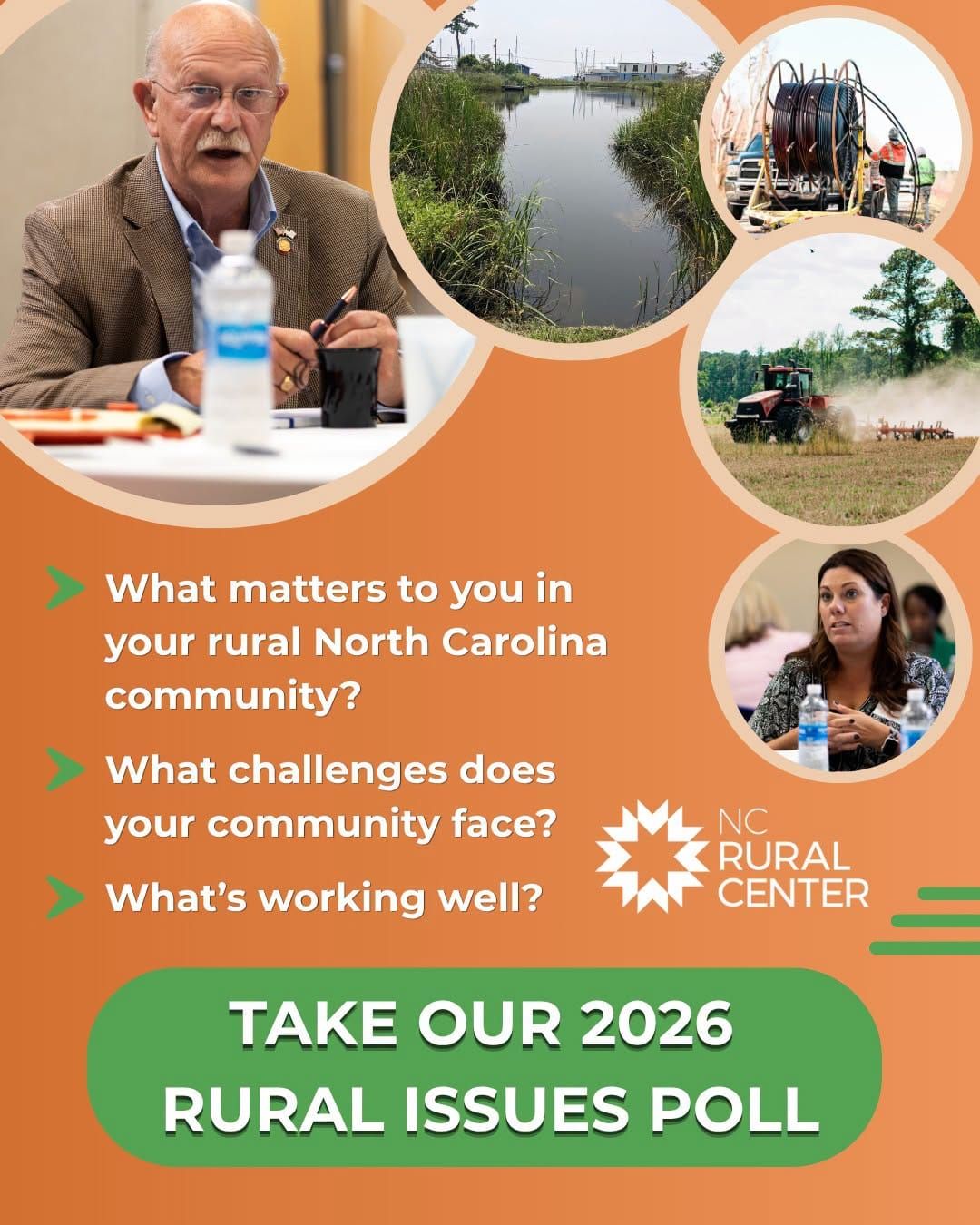
The NC Rural Center wants to hear directly from the people who live and work in rural communities across our state.
What’s happening in your rural North Carolina community? What is working well? What challenges are you facing? What deserves more attention?
This fall, NC Rural Center staff will visit 10 rural North Carolina towns to hear what is on the mind of individuals living and working in the state’s rural areas as part our 2026 Rural Listening Tour.
For people who cannot join the tour or may like to share their opinions in an online format, feedback about what’s happening in rural North Carolina can also be shared in the 2026 Rural Issues Poll.
Take the 2026 Rural Issues Poll and tell us what matters to you. Your responses will help inform the Rural Center’s 2027 Advocacy Platform and the issues brought to the table on behalf of rural North Carolina.
Take the poll by visiting the following link: https://ow.ly/H7G250ZKTEz
What Is the Rural Center’s Advocacy Platform?
In short, the Rural Center’s advocacy platform, according to Dave Kaiser, the Center’s senior director of policy, advocacy, and innovation, shares what the Rural Center stands for and will advocate for in the future.
More specifically, Dave explains that “[the Rural Center’s] advocacy platform is our statement externally to rural communities, the broader state at large, policy makers, business leaders, and so forth, about what the Rural Center believes in, advocates for, and in some cases, lobbies for, for the benefit of rural North Carolina."
The Center’s advocacy platform sprung from an 80-county road trip that Center President and CEO Patrick Woodie and former Advocacy Director John Coggin took in 2017. On the trip, they spoke with county commissioners, mayors, General Assembly members, and people working in rural North Carolina advocacy and nonprofit policy.
Collecting (and Learning From) Tour and Poll Data
During the last listening tour, in 2024, the Center used the same format being used in 2026: pairing a listening tour with an online poll. This format allows us to collect qualitative feedback from the tour and quantitative feedback from the poll, says Rural Center Research and Data Manager Dalton Bailey. We can then look at the tour and poll data in tandem with federal data.
“Data from the federal level, it only goes so far,” Dalton says. “And to make it really, really pop and to make it really useful and make sure that we’re on the right kind of direction of some of the things that we’re prioritizing, we can partner that with like some of the stuff that we will actually hear from folks on the ground.”
For example, Dalton explains, “We know that affordable housing is an issue, but when we’re on the actual listening tour, we can talk to folks about like, what is contributing to that issue. What are some solutions that have been put in place in rural communities to actually start addressing some of that issue? What are some innovations? And that’s stuff that I think that we would miss out on if we were just relying on federal data sources or even just the poll itself. I think when you combine all three [types of data], you can get a really holistic view of what’s going on and it makes us a better voice for rural communities, especially in the advocacy realm.”
Keeping Things Grassroots on Purpose
Both the tour and the poll are grassroots efforts spread through word of mouth, local media, social media, partners, and state-level organizations. When it comes to tour and poll participants, the center is neither picking nor paying respondents. “We’ll take anybody who will respond. And then we do ask them, if they’re willing to share, where they stand politically, what counties they live and work in and so forth so we can try and have some kind of balance,” says Dave, continuing, “we’re looking to get as diverse geographically, politically, and industrially as possible so that it reflects the nature of rural North Carolina, which we know varies widely.”
Individuals wishing to join a stop on the tour can do so on the Listening Tour webpage.
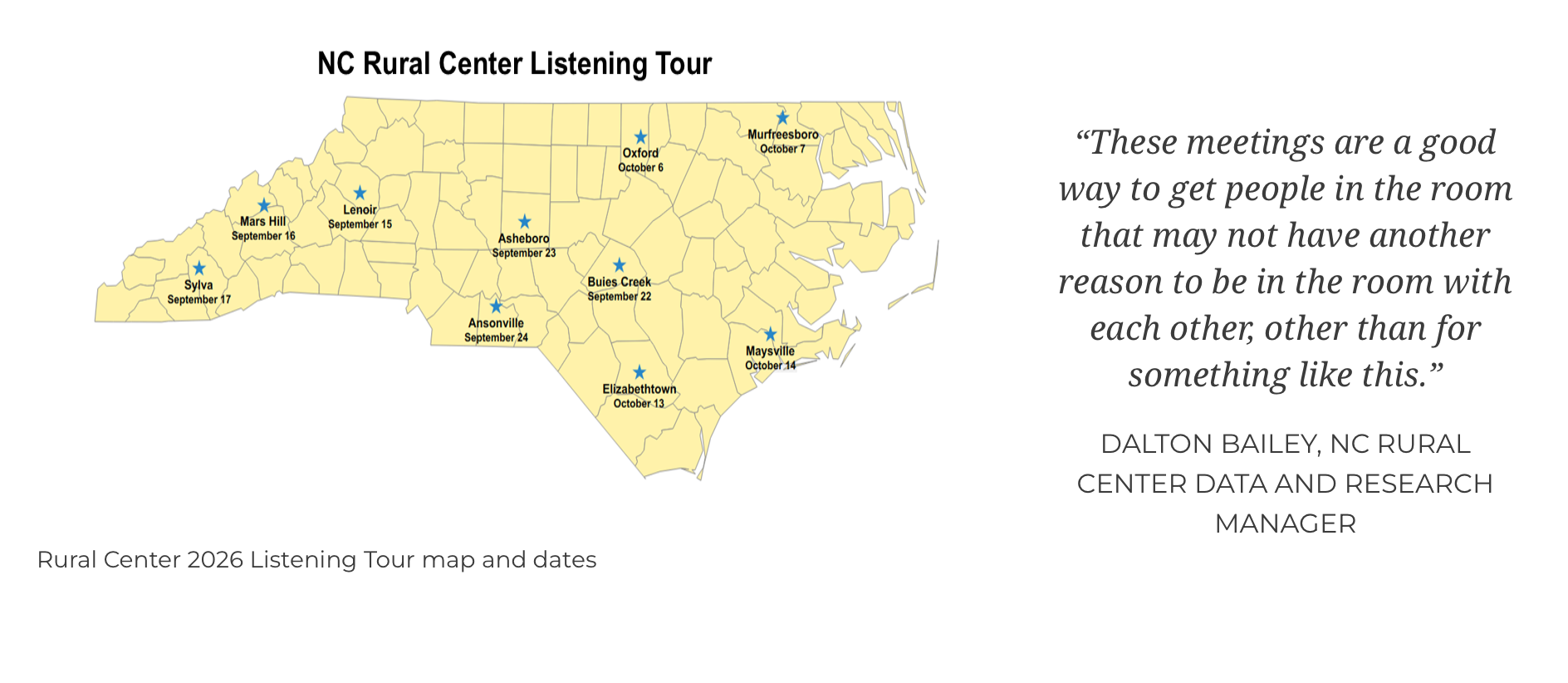
What Happens at Each Tour Stop?
Each listening session begins with an introduction to the Rural Center’s work along with brief information about the tour. Then, session participants are split into groups, each with a Rural Center staff member, for a facilitated discussion around what’s happening in their community in different policy areas: education & workforce, infrastructure, business & economic development, and health.
How Does Your Feedback Shape Our Advocacy Work?
According to Dave, tour and poll feedback help shape our advocacy platform because they offer direct feedback about the concerns, solutions, problems, and needs currently affecting rural North Carolinians.
Dalton adds that an unsung part of the tour is the Center’s role as a regional convener, “these meetings are a good way to get people in the room that may not have another reason to be in the room with each other, other than for something like this.” Because these stops are about more than just talking about a region’s issues, they’re also a place to talk about its innovations and successes.
Even though our office is in Raleigh, listening to rural people in their own communities is a vital part of the Rural Center’s mission. “The Rural Center works for North Carolina’s 78 rural counties,” says Dave. “In a lot of ways, those 78 rural counties have not seen the gains of our urban areas for the last 40 years and it’s led to frustrations. It’s led to changes in political leadership. It’s led to significant policy changes in this state. And making sure that rural North Carolina has a voice, not just at the General Assembly, but has a champion in it, whether we’re here in Raleigh or whether we’re in the communities. Knowing that there’s somebody out there advocating for them, I think is important.”
The Rural Center’s 2027 Advocacy Platform will released publicly in early 2027.