Caswell Works: Connecting Our Community to Opportunity
When businesses, schools, community organizations, and local leaders work together, we can do more to help people find good jobs, help businesses find skilled workers, and create opportunities for our communities to grow.
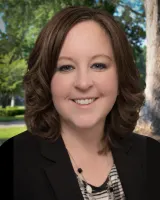

I want to begin my first Caswell Works column with a word of thanks. Earlier this year, the Caswell County Board of Commissioners voted unanimously to appoint me to represent Caswell County on the Piedmont Triad Regional Workforce Development Board. I am grateful for their trust and excited about the opportunity to serve our community in this role.
For those who may not know me, I serve as the Provost of Regional Campuses and Strategic Initiatives at Piedmont Community College (PCC). My office is located on our Caswell County Campus, and I have a deep connection to this community. I grew up here. Both sides of my family have roots here. I come from a family of construction workers, educators, and farmers, and I grew up understanding what hard work can mean for a family and for a community. Caswell County is more than just the place where I work. It invested in my family and me and gave me my start. That is one reason this appointment means so much to me.
My goal is simple. I want to do right by the community that has trusted me to serve in this role. I want to learn about the opportunities, challenges, and ideas discussed across our region and bring that information back to Caswell County. Just as importantly, I want to hear from you. I believe our community has a great deal to offer, and I want to help make sure our voices and needs are part of regional conversations.
So, what exactly is the Workforce Development Board?
The Piedmont Triad Regional Workforce Development Board brings together people from businesses, government, education, nonprofit organizations, and labor groups to help strengthen our region's workforce. The board serves ten counties: Alamance, Caswell, Davidson, Davie, Forsyth, Randolph, Rockingham, Stokes, Surry, and Yadkin. While each county has its own needs and challenges, we also share many of the same goals when it comes to helping people find meaningful work and helping businesses succeed.
The board's motto is "Convening Partners to Develop Creative Workforce Solutions." That may sound like a lot of words, but the idea is pretty simple. When businesses, schools, community organizations, and local leaders work together, we can do more to help people find good jobs, help businesses find skilled workers, and create opportunities for our communities to grow. The board also helps guide how workforce programs and resources are used across our region. Much of this work is connected to a federal law called the Workforce Innovation and Opportunity Act, or WIOA.
What is WIOA, and why does it matter?
WIOA was signed into law in 2014 and generally took effect in 2015. Its purpose is to help people gain the education, skills, and support they need to find jobs and build lasting careers. It also helps businesses connect with the workers they need. One of the most important parts of WIOA is its focus on helping people develop career plans that can lead to long-term success. This might mean helping someone who has lost a job find a new one, helping a young adult explore career options, or connecting someone with training to move into a better-paying field.
Here in North Carolina, many of these services are offered through NCWorks. NCWorks helps people explore careers, search for jobs, develop career plans, and learn about training opportunities. Many of these services are available at no cost. This is also where partnerships with community colleges become especially important. At PCC, our NCWorks partners hold regular weekly office hours on the Caswell County Campus. This gives residents a place to connect with workforce services and explore their next steps without having to travel outside the county.
The Workforce Development Board helps oversee NCWorks Career Centers and workforce programs throughout our ten-county region. It also works with employers to identify training needs, support current workers in learning new skills, and develop partnerships that can help our local economies grow. The board has three main goals. In everyday terms, these are to use information and data to help more people improve their lives through work, bring partners together to solve workforce challenges, and make sure more people and businesses know about the services and opportunities available to them. I think all three goals matter greatly for Caswell County.
We have people who want to work, people who want to learn new skills, and businesses that need good employees. We also have schools, community organizations, and local leaders who care deeply about the future of our county. The more we connect these groups with opportunities across the region, the stronger our community can become.
Where do we go from here?
Through this column, I hope to share what I learn as a member of the Workforce Development Board. That might include new training programs, services for job seekers, opportunities for local businesses, or partnerships that could benefit Caswell County. I also hope this column becomes a two-way conversation. What workforce needs do you see in our community? What opportunities should we explore? Are there partnerships or ideas that could help our residents and businesses succeed? I would love to hear from you. You can learn more about the Piedmont Triad Regional Workforce Development Board at:
https://www.ptrc.org/services/workforce-development/about-the-workforce-development-board
You can also reach me directly at emily.buchanan@piedmontcc.edu with questions, ideas, or suggestions. I am grateful for the opportunity to represent Caswell County, and I look forward to learning, listening, and sharing what I can along the way. After all, the future of our workforce is something we all have a part in building. Stay tuned!
Emily Buchanan, M. Ed. serves as the Provost of Regional Campuses and Strategic Initiatives at Piedmont Community College. A Caswell County native and lifelong educator, she has 18 years of experience in public service as a K-12 teacher, school administrator, and higher education professional. She is committed to connecting her community with opportunities for education, workforce development, and economic growth.