Managing Fire Ants
Extension agent offers advice for treating fire ants.

This week's Ag Chat is offered by Anass Banna, Extension Agent, Small Farms at N.C. Cooperative Extension's Caswell County Center.
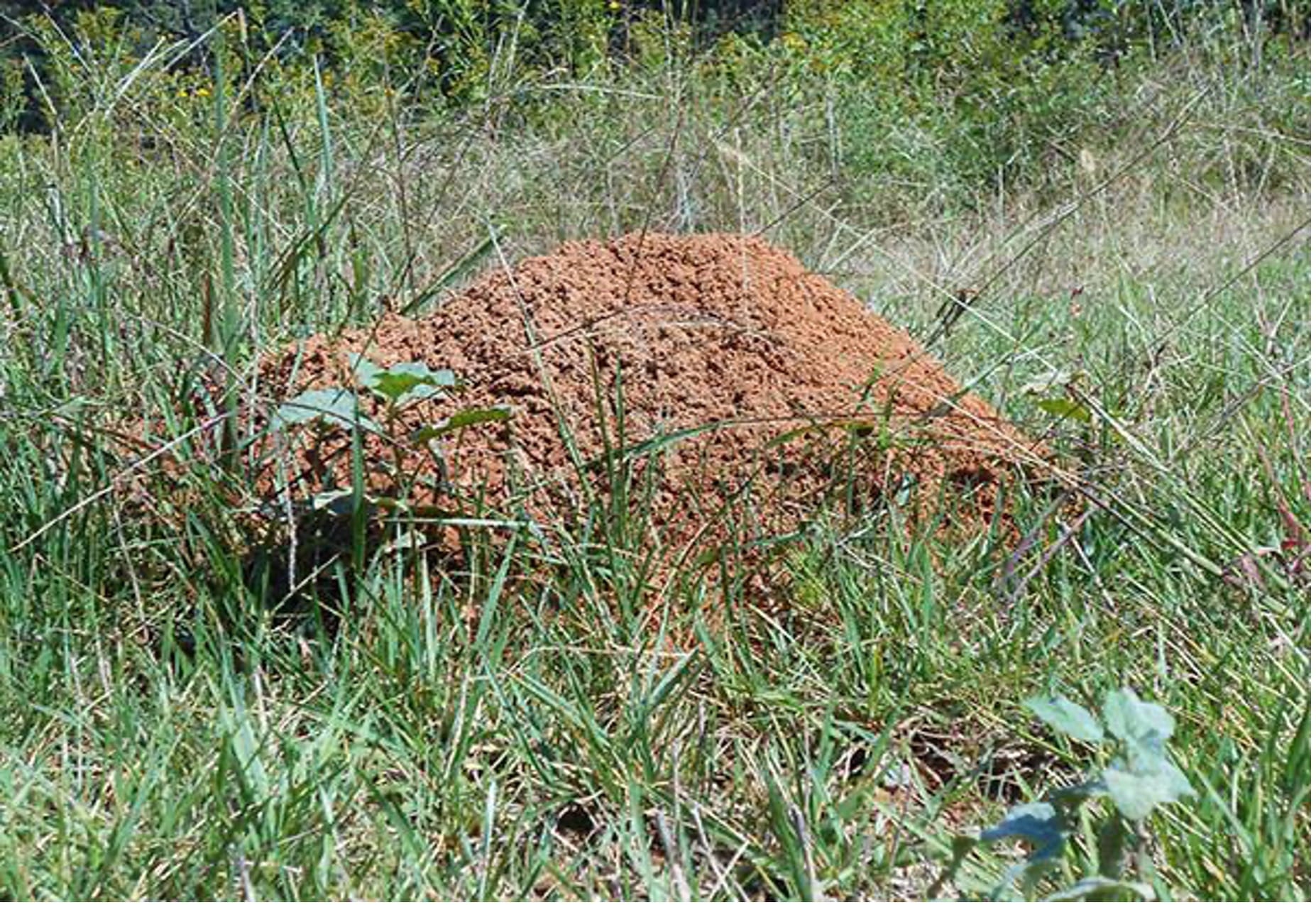
Fire ants are a common nuisance in home vegetable gardens. In addition to being a stinging pest, they can cause damage to vegetable crops, such as okra and Irish potatoes. In dry conditions, they may also damage tender seedlings and transplants by feeding on the stems. There are two main strategies for managing fire ants in vegetable gardens: applying baits and treating individual mounds.
Fire Ant Baits
Baiting may be done near specific mounds, or broadcast across a large area. Baits generally, should not be applied directly onto the mound. Ants do not forage on top of the mound. Fire ant entrances are located around the outside edges of a mound. Not all baits that can be used at a mound may also be used as a broadcast. Read the label. Baits are actually food and depend upon that food being attractive for the ants to take it in. Some baits are direct poisons and some are insect growth regulators which, instead, cause the colony to die out more gradually.
Baits are slower acting than direct mound poisons so do not expect results overnight. Baits rely on foragers to collect the food and bring it back to the rest of the colony to eat. In mid-morning before baiting, drop one or two potato chips near a mound. If ants are consuming the potato chips after 20 minutes, it is a good time to apply bait.
Tips for success:
- Buy fresh bait and store for only a short time.
- Do not store bait near other pesticides, fuels or products from which it will absorb odors.
- Do not apply it to wet grass or when rain is expected within 24hrs.
- Do not disturb the mound. Ants that are rebuilding or defending a nest are not busy foraging.
Bait Product Name | Active Ingredient | Application |
Ortho fire ant killer and others | Acephate | Apply early in the morning for best results |
Come 'n Get It Fire Ant Killer by Fertilome | spinosad | * |
GreenLight Fire Ant Control with Conserve | spinosad | * |
Ortho ecosense brand | spinosad | * |
Orange Guard) | d-limolene | * |
Check the weather forecast and broadcast bait when rain is not expected for a day or two following the application. Rain will wash away or dissolve bait granules. If applying after rain or early in the morning, wait until the ground is dry.
While fire ant baits with other active ingredients exist, Spinosad-based products are the most economical for home gardens. Spinosad products are very effective, but it is important to remember baits are relatively slow acting. It will take two to three weeks to see results.
Most fire ants that invade vegetable gardens come from mounds located in adjacent lawns; therefore, managing ants in the lawn can be very helpful at reducing populations within the garden. Again, be sure any baits that do not specifically mention vegetables on the label are not applied to the vegetable garden.

About N.C. Cooperative Extension
N.C. Cooperative Extension brings research-based knowledge and programs to all North Carolinians, focusing on nine significant goals through its 4-H and Youth Development, Agriculture and Natural Resources, Community and Rural Development, and Family and Consumer Sciences programs. N.C. Cooperative Extension is a strategic partnership between the state's two land-grant institutions – NC State University and N.C. A&T State University. Each school coordinates Extension programs that work in collaboration with the U.S. Department of Agriculture’s National Institute of Food and Agriculture (USDA-NIFA), state and local governments, and industry and community partners.
Extension has offices in every North Carolina county and with the Eastern Band of Cherokee. The staff and volunteers work with local government to support agriculture, horticulture, natural resources, nutrition and health, as well as a variety of consumer, youth and economic concerns.
The Caswell County Center is located in the County's Agricultural Building at 126 Court Square in Yanceyville and can also be reached by telephone at 336-694-4158. Visit their website for a full staff directory and email contacts.