Protecting Caswell County's Children From Sexual Predators
Sexual abuse often goes underreported by both victims and those who may suspect abuse. When should you report and who should you tell?


An individual who was employed by Caswell County Schools in 2005 – 2008 is now facing felony charges of Sexual Activity with a Student by School Personnel, prompting many in the community to ask questions about things such as prevalence, the statute of limitations, mandatory reporting, and the safeguards currently in place to protect students from sexual predators.
Dispelling Myths
The National Child Traumatic Stress Network says that child sexual abuse is not rare and reports that research indicates that as many as 1 out of 4 girls and 1 out of 6 boys will experience some form of sexual abuse before the age of 18. However, many of those cases go unreported.
“If the abuser is someone the child or the family cares about, the child may worry about getting that person in trouble,” explained a fact sheet published by the National Child Traumatic Stress Network. “In addition, children often believe that the sexual abuse was their own fault and may not disclose for fear of getting in trouble themselves.”
Meredith Peffley, the Executive Director of CrossRoads, which serves as Caswell’s Child Advocacy Center, explained that the state of North Carolina does not have a statute of limitations for felony sex offenses, meaning that the victim always has the option to file charges regardless of how much time has passed.
“The victim has as much time as they need,” Peffley stated, explaining that years may pass before a victim recognizes the behavior as abuse. “It’s their story to tell and they don’t have to tell it until they are ready.”
Fear of not being believed and feelings of shame or guilt are frequently cited as reasons victims choose not to report the abuse.
Experts also warn that it is not strangers who pose the greatest threat.
Peffley estimates that 60%-70% of reported cases involve someone the child was close to such as a family member, teacher, pastor, coach or others who are often considered to be “safe.”
Peffley said that there is a misconception that only certain professionals are considered mandatory reporters but emphasized that in North Carolina, everyone over the age of 18 is considered a mandatory reporter.
That means that if you have reasonable cause to suspect that a juvenile is abused, neglected, dependent, or has died from maltreatment, you are legally required to report it to the county Department of Social Services (DSS) and law enforcement.
One common misconception is that you must have proof before reporting but according to North Carolina law, absolute proof or certainty is not needed. Reasonable cause to suspect abuse, neglect, or human trafficking is enough to trigger the legal duty.
Another common misconception is that some may be excluded from the mandatory reporting requirement but the law explicitly states that “No privilege shall be grounds for any person or institution failing to report that a juvenile may have been abused, neglected, or dependent, even if the knowledge or suspicion is acquired in an official professional capacity, except when the knowledge or suspicion is gained by an attorney from that attorney's client during representation only in the abuse, neglect, or dependency case.”
The law also requires DSS to keep a reporter's identity confidential, releasing it only under specific legal or court orders and provides to those reporting suspected child abuse immunity from civil and criminal liability so long as they are found to have been acting in good faith.
Knowingly or wantonly failing to report a case or blocking another person from reporting can lead to a Class 1 misdemeanor charge.
A professional educator can face disciplinary sanctions, up to and including the revocation of the educator’s license if it found that they failed to report suspected child abuse in accordance with G.S. 115C-400 or other suspicion of professional misconduct by a licensed employee in accordance with state law and State Board of Education policy.
While there is no statute of limitations for felony sex offenses, there is a 10-year statute of limitations on charges for failure to report.
The North Carolina Department of Public Instruction states that, “Any public school unit administrator who knows, has reason to believe, or has actual notice of a complaint that a licensee has engaged in conduct that justifies automatic revocation of a license under G.S. 115C-270.35(b); conduct that has resulted in a criminal charge or indictment for any of the crimes listed in G.S. 115C-270.35(b); or conduct involving the physical or sexual abuse of a child or a student, must report the misconduct to the Superintendent (State Superintendent of Public Instruction) within 5 calendar days of the licensee's dismissal, suspension without pay, or acceptance of the licensee’s resignation."
Age of Consent and Grooming
The age of consent in North Carolina is 16 but state law explicitly prohibits the use of consent as a defense if the victim was a student enrolled at the same school where the defendant was employed, assigned, or volunteered.
Peffley explained that the laws around consent are stricter for situations involving students because of the power dynamics that exist between students and school personnel.
The severity of charges in such cases is usually determined by whether or not the staff member was more than four years older than the student. Staff less than four years older than the student are charged under a different felony class.
The North Carolina Department of Justice defines grooming as “a process where an adult builds a close, trusting relationship with a child or teen to manipulate, control, and sexually exploit them.”
Common stages of the grooming process include targeting of vulnerable individual; building trust through excessive attention, gifts, or favors; isolating the victim; gradual normalization of inappropriate topics or boundary-crossing behaviors; and using manipulation, threats, or emotional pressure to maintain control and secrecy.
Peffley explained that grooming was a process that takes place over time. She warned that although grooming is not new, the internet offers predators much more access to victims.
What Processes Are in Place at Caswell County Schools to Protect Students?
Jane Frazier is currently the Human Resources Director for Caswell County Schools (CCS) and serves as the Title IX Coordinator who leads any investigations or proceedings related to Title IX.
Title IX is the 1972 federal civil rights law that protects students and staff from sexual harassment, assault, and violence, in addition to ensuring fair treatment in academics and admissions, prohibiting discrimination against pregnant or parenting students and requiring equal opportunities in athletics.
Frazier explained that the process for screening employees is dictated by CCS Board Policy 7100 which requires that all employees, including coaches, complete fingerprinting and a background check upon hire.
Once hired, CCS Board Policy 7300, requires staff to notify human resources if they are “arrested for, charged with or convicted of a criminal offense (including entering a plea of guilty or nolo contendere) other than a minor traffic violation (i.e., speeding, parking or a lesser violation).
The process for screening volunteers is governed by CCS Board Policy 5015 and determined by whether a volunteer is considered Level I or Level II. Level II volunteers may work closely with or supervise students, so they are required to undergo the same criminal background check as employees. Volunteer background checks expire after three years.
Frazier explained that the process for addressing Sexual Harassment, including sexual assault and other forms of sexual misconduct, is outlined in CCS Board Policy 1726/4036/7237 and aligned with Title IX procedures.
“Any sexual misconduct of any type may be reported to any school employee, which should then be reported to a supervisor and the Title IX coordinator for the district,” Fraizer said. “Any employee with knowledge of misconduct is required to report.”
“Caswell County Schools works with PublicSchool Works, an employee training and risk management software system, to push out training to all staff that is required by federal and state mandates on the appropriate mandated time schedules. The training included modules on NC SAFE Child Act,” Fraizer explained, adding that, “administrators and district leadership are trained with Title IX Investigations.”
In accordance with the Protect Our Students Act (Session Law 2023-128/House Bill 142), the North Carolina Center for Safer Schools has developed and produced age-appropriate safety videos for students in grades six through twelve that addresses grooming and a training video for staff. Frazier said that the videos and training are required at the start of each school year.
How to Report and/or Receive Services
Any adult who has reasonable cause to suspect that a juvenile is abused, neglected, dependent, or has died from maltreatment, is legally required to report it to the county Department of Social Services (DSS) and law enforcement. You can reach Caswell County DSS at 336-694-4141 and the Caswell County Sheriff’s Office at 336-694-9311.
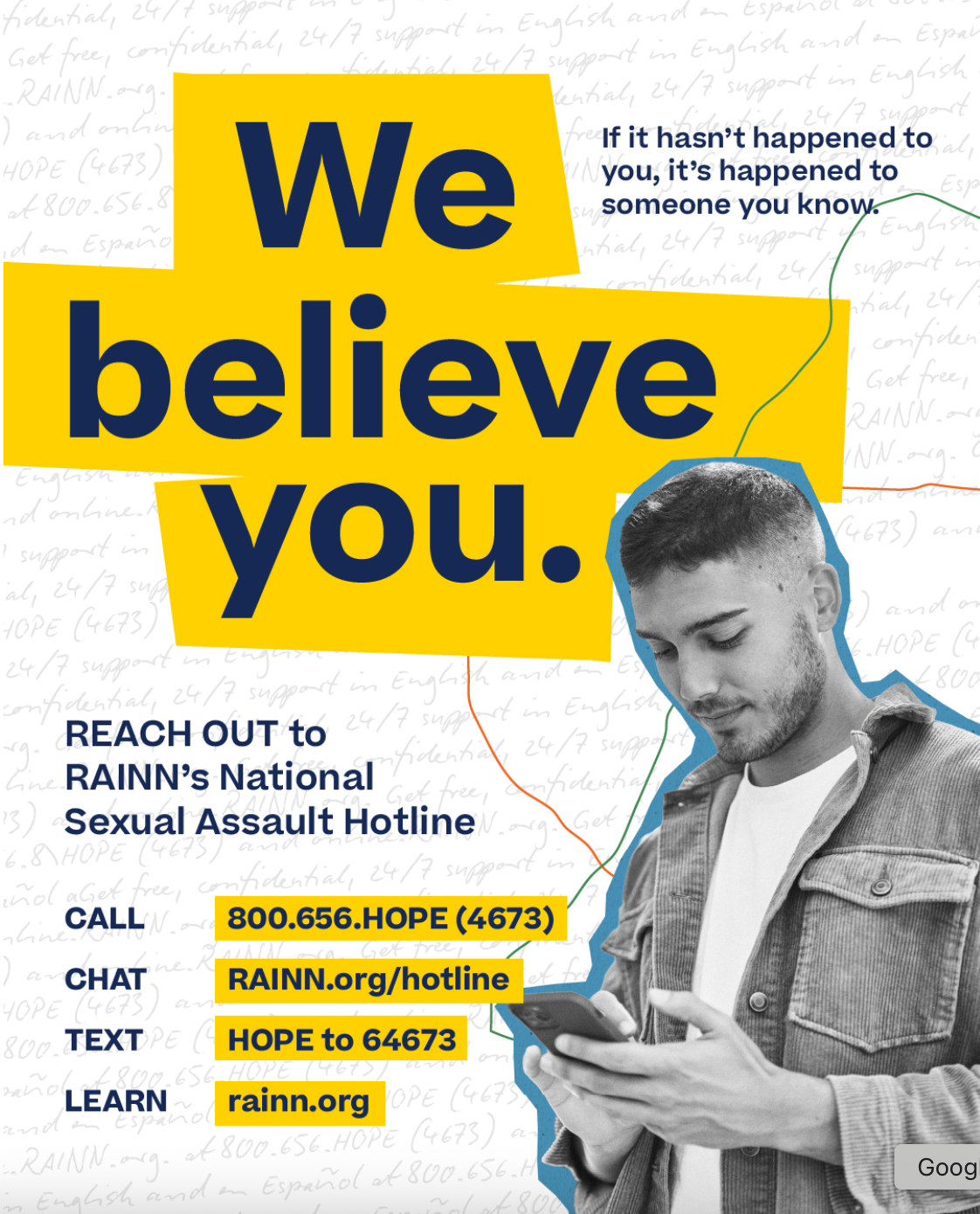
Reporters and victims are also encouraged to contact CrossRoads’ 24-Hour Crisis Helpline 336-228-0360 for help accessing supportive resources and navigating legal processes.
Peffley emphasizes that adult victims of child sexual abuse are encouraged to seek support through organizations such as CrossRoads, even if they are not wishing to file charges.
Students who are experiencing or suspect others are experiencing sexual abuse or misconduct, including grooming behaviors, may also report the concern through the 24/7 Say Something hotline at 1-844-5-SayNow or ONLINE HERE.
Community members and organizations seeking training or more information on how to prevent, recognize, and/or respond to child sexual abuse are encouraged to explore the following resources:
- CrossRoads Community Outreach
- RAINN
- National Sexual Violence Resource Center
- Darkness to Light
- What Would It Take to End Child Sexual Abuse? (article from the Bloomberg School of Public Health at John Hopkins)
- Child Advocacy Centers of North Carolina